When we talk about nutrition, most people focus on calories, protein, vitamins, or superfoods. Rarely do we think about the plates, pots, and spoons we use every day. Yet growing research shows that kitchenware quietly influences how much we eat, how nutrients are absorbed, how full we feel, and even how food tastes.
Your kitchen tools act as silent partners in your health journey either supporting better nutrition or subtly working against it.
Cookware That Does More Than Cook
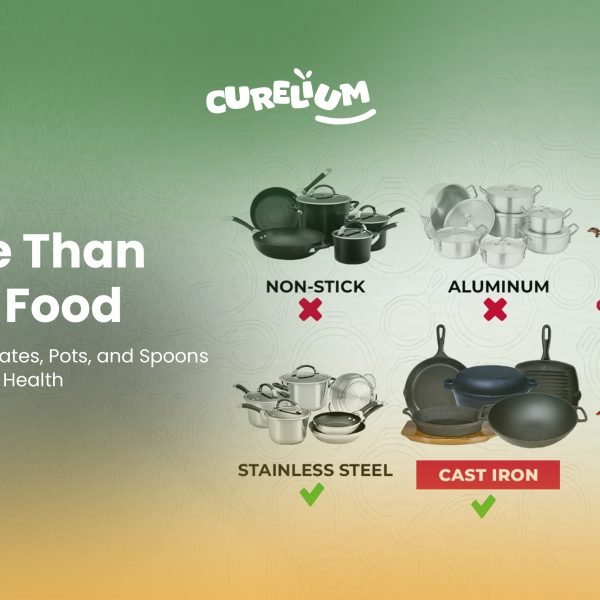
The cookware you use can directly affect the nutritional quality of your meals:
Cast Iron Pans
Cooking acidic foods like tomatoes or lentils in cast iron can naturally increase iron intake, supporting energy levels and healthy blood.
Clay Pots
Slow cooking in clay helps retain minerals and vitamins, enhances flavor, and improves satiety making meals more nourishing.
Copper & Brass Utensils
Traditionally valued for antimicrobial properties, they may release trace minerals. However, balanced and moderate use is essential.
Aluminum Cookware
Overheating acidic foods can release aluminum ions, which may impact long-term health when used excessively.
Non-Stick Pans
Convenient, but damaged coatings may release micro-particles best avoided when scratched.
Even small cookware choices can make a meaningful difference in everyday nutrition.
How Plates Influence Portion Size
Your plate may be quietly guiding how much you eat:
- Larger plates encourage larger portions due to visual illusion (Delboeuf effect)
- Deep bowls lead to over-serving soups and cereals
- Plate color affects appetite low contrast between food and plate can increase intake
- Mindful plate selection can support portion control without dieting.
Utensils That Improve Satisfaction and Digestion
- How you eat is often as important as what you eat.
- Heavier cutlery makes food feel more satisfying
- Chopsticks slow eating, helping fullness hormones activate
- Eating with hands increases sensory awareness, improving digestion and satisfaction
- These subtle tools help the brain register fullness and pleasure sooner.
Food Storage: Protecting Nutrition After Cooking
Nutrition doesn’t end once cooking is done:
Plastic Containers
Hot food stored in plastic may leach chemicals like BPA.
Glass Containers
Neutral, safe, and ideal for preserving nutrients.
Steel Containers
Durable, safe, and excellent for long-term food storage.
The right storage helps maintain food quality and health benefits.
The Bigger Picture
Your kitchen is more than a cooking space—it’s a silent nutrition coach.
Your cookware and utensils influence:
Portion size
Nutrient retention
Satiety and digestion
Mindful eating habits
Next time you think about eating healthy, don’t just ask:
“What’s on my plate?”
Ask: “What am I eating it with?”
Because nutrition doesn’t begin with food alone it begins with the tools that deliver it.